
A roll, not a plate
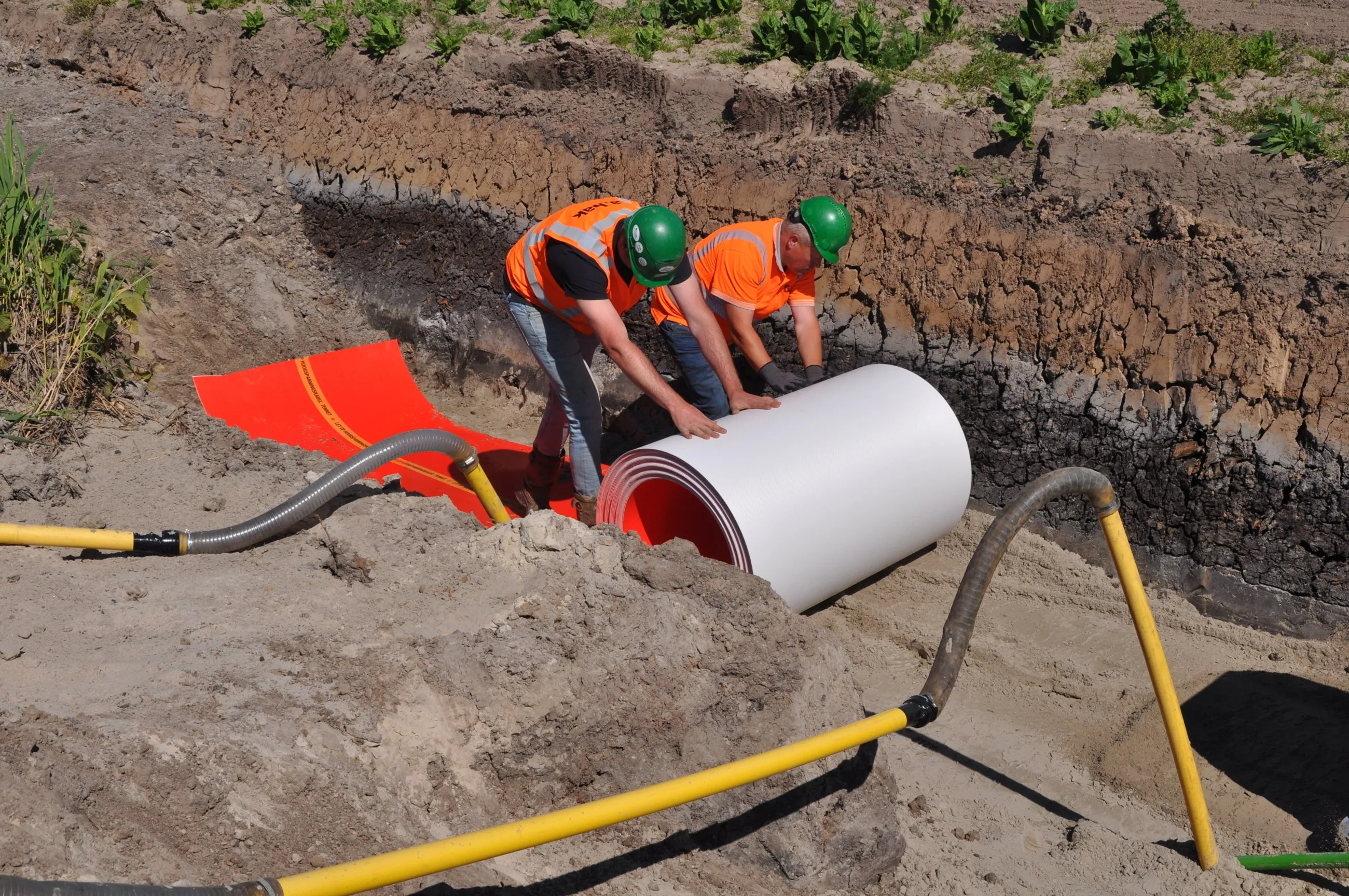
PowerShield HV cable protection rolls replace heavy polyethylene plates with a 2.4 mm thick roll that weighs only 1.68 kg/m². Roll dimensions are tailor made: width up to 1.36 m and length up to 200 m, for ease of installation.
Behind the light weight is a patented combination of composite and technical-textile technology. The result meets the NEN-EN 50520 impact requirements and is approved by TenneT for the protection of high voltage cables.
- Width
- 30 – 136 cm
- Length
- Up to 200 m
- Weight
- 1.68 kg/m²
- Thickness
- 2.4 mm
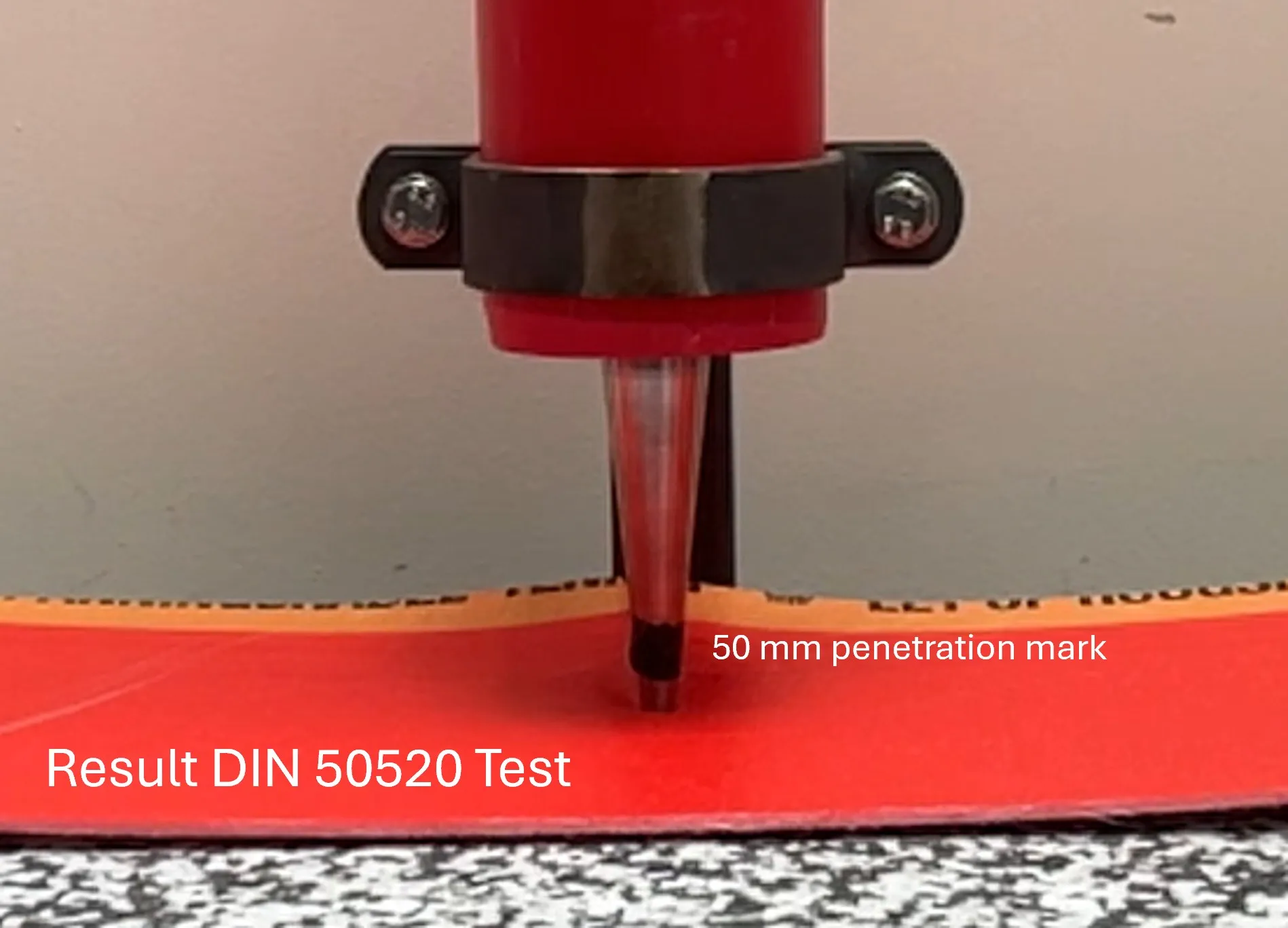
PowerShield meets TenneT’s requirement of a maximum hammer penetration of 50 mm in the NEN-EN 50520 test.
Six reasons to switch
-
Easy to install
At 1.68 kg/m², rolls are carried and laid by hand or unwound straight from a machine.
-
High impact strength
Less than 50 mm hammer penetration in the NEN-EN 50520 test, as required by TenneT.
-
Chemically resistant
Polypropylene is inert in soil, so the protection lasts as long as the cable.
-
Sustainable
100% recyclable polypropylene with around 80% lower CO₂ than PE plates.
-
Easy to shape or cut
Cut curves and lengths on site with a sharp carpet knife.
-
Performs in all conditions
Cold-resistant and stays flexible in every season.
Sustainability
Carbon footprint
PowerShield is made from flexible self-reinforced polypropylene. Its carbon footprint is approximately 6.2 kg CO₂ equivalent per m², calculated over every step from yarn to site.
6.241kg CO₂-eq per m²
- Made from self-reinforced polypropylene
- 100% recyclable after use
- Transport adds less than 1% of the total
| Process step | kg CO₂-eq/m² |
|---|---|
| Yarn production / weaving | 4.000 |
| Transport to factory Based on 44.7 kg per 100 km | 0.049 |
| Intermediate layer (production) | 0.993 |
| PowerShield production | 1.190 |
| Transport to site Based on 200 km | 0.009 |
| Total carbon footprint | 6.241 |
Values in kg CO₂ equivalent per m² of PowerShield.
Tested to NEN-EN 50520
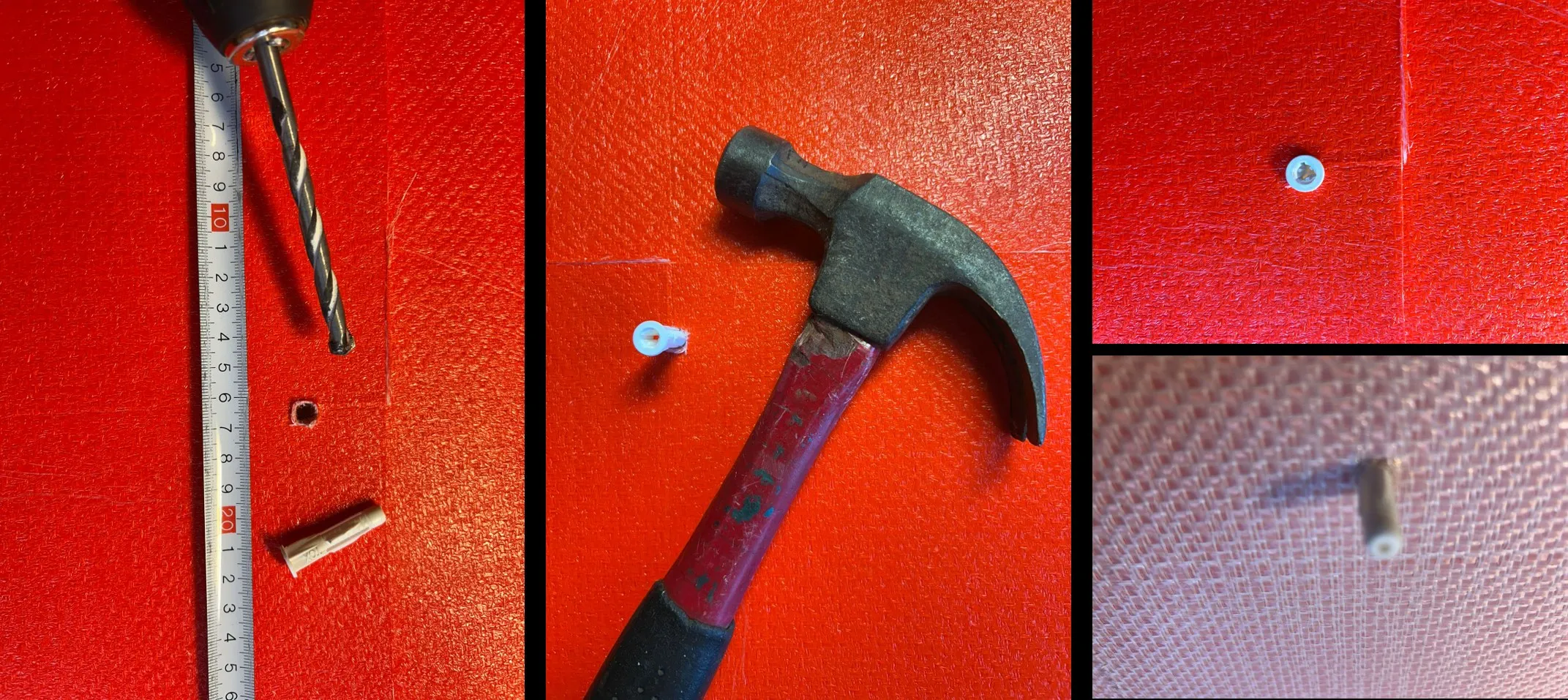
PowerShield is tested to the European standard for protective plates for buried cables. These clips show what that means in practice.
Test results
PowerShield was type tested with the punch energy test of NEN-EN 50520 – 10.2, including TenneT’s additional requirement of a maximum penetration of 50 mm. The test was witnessed by Kiwa Nederland.
- 18 / 18Drops passed
- 41 mmHighest measured penetration
- < 50 mmRequirement (TenneT)
- 0Samples broken
Report details
Test conditions
- 10 kg pin (shape per NEN-EN 50520 Annex B), drop height 500 mm
- 3 samples, 3 drops per sample, in each series
- Cold series: samples 1 hour in a cold cell at −15.4 °C, tested within 60 seconds
- Ambient series: samples tested at 22 °C
- Pass: penetration of no more than 50 mm and no sample breaks
| Test | Sample | Requirement | Measured | Result |
|---|---|---|---|---|
| 1-1 | B1-1 | < 50 mm | < 50 mm | Pass |
| 1-2 | B1-2 | < 50 mm | < 50 mm | Pass |
| 1-3 | B1-3 | < 50 mm | 40 mm | Pass |
| 2-1 | B2-1 | < 50 mm | < 50 mm | Pass |
| 2-2 | B2-2 | < 50 mm | < 50 mm | Pass |
| 2-3 | B2-3 | < 50 mm | 37 mm | Pass |
| 3-1 | B3-1 | < 50 mm | < 50 mm | Pass |
| 3-2 | B3-2 | < 50 mm | < 50 mm | Pass |
| 3-3 | B3-3 | < 50 mm | 36 mm | Pass |
| Test | Sample | Requirement | Measured | Result |
|---|---|---|---|---|
| 1-1 | A1-1 | < 50 mm | 35 mm | Pass |
| 1-2 | A1-2 | < 50 mm | 38 mm | Pass |
| 1-3 | A1-3 | < 50 mm | 38 mm | Pass |
| 2-1 | A2-1 | < 50 mm | 35 mm | Pass |
| 2-2 | A2-2 | < 50 mm | 40 mm | Pass |
| 2-3 | A2-3 | < 50 mm | 38 mm | Pass |
| 3-1 | A3-1 | < 50 mm | 36 mm | Pass |
| 3-2 | A3-2 | < 50 mm | 41 mm | Pass |
| 3-3 | A3-3 | < 50 mm | 37 mm | Pass |
Cold series: all three drops had to be made within 60 seconds of removing a sample from the cold cell, so the penetration was measured on the third drop; the other drops were assessed from observation and photos as well below 50 mm.
Both series meet the requirements of NEN-EN 50520 – 10.2 and TenneT’s additional requirement of a maximum penetration of 50 mm. No sample broke.
Product data sheet
PowerShield 3.0. Values from independent testing to the standards listed.
| Property | Value | Standard |
|---|---|---|
| Mechanical properties | ||
| Thickness | 2.4 mm | – |
| Tensile strength (MD / CMD) | 167.2 / 133.6 MPa | EN ISO 527 |
| Elongation (MD / CMD) | 14.0% / 16.9% | EN ISO 527 |
| Diagonal elongation | 21.7% | – |
| Impact testing | ||
| Hammer penetration | < 50 mm (TenneT) | DIN EN 50520 |
| Specimen break | 4 times, no break | DIN EN 50520 |
| Electrical properties | ||
| Electrical breakdown voltage | 58 kV/mm | EN 53843 |
| Electrical resistance | 16 Ω·cm | EN 53843 |
| Dielectric constant | 2.1 (100 Hz) | EN 53843 |
| Roll dimensions | ||
| Roll width | 300 – 1,360 mm | – |
| Roll length | Tailor made, up to 200 m | – |
| Weight | 1.68 kg/m² | – |
PowerShield versus competition
How PowerShield compares with traditional utility protection plates and protection material on a reel, from delivery to carbon footprint.
Scroll sideways to see all columns
| Utility protection plates | Protection material on reel | PowerShield manual installation | PowerShield machine installation | PowerShield advantage | |
|---|---|---|---|---|---|
| Delivery | |||||
| Delivery | Plates on pallets, placed alongside the ditch | On a reel that must be returned afterwards; limited reels per truck | Rolls on pallets, placed alongside the ditch | Efficient delivery, no return material (no reel cores) | |
| Installation: labour | |||||
| Material weight | 8 kg/m² (8 mm) to 12 kg/m² (12 mm) | 1.68 kg/m² (2.4 mm) | Much lower weight | ||
| Installation | Place plates in ditch and make connections | Large reel, special equipment required | Easy, light work | Load into equipment and unwind (red side up) | No heavy labour required |
| Installation: ease | |||||
| Roll length | Plates only (1.20 m long) | Only large rolls on reel; short rolls are not economical | Any roll length and width. Self-supporting, so no core material needed | Tailor-made roll length per project, no return material | |
| Making curves | Easy | Difficult; material is stiff and heavy to manoeuvre | Fairly simple. Cut with a carpet knife; small parts or rolls can also be supplied | Easy to cut and bend | |
| Installation speed | 80 m/h, 2 people | 5,000 m/h, 2 people | 3,000 m/h, 2 people | 8,000 m/h, 1 person | Much higher installation speed |
| Connecting material | Pin connection, 10%+ material lost to overlap | Not known | Plug-in-hole connection, around 0.1% loss from overlap (depending on roll length) | Quick connection, almost no overlap loss | |
| Plough installation | Not possible | Very heavy reel; limited widths | Tailor made in length and width, extremely low weight | Extremely well suited to plough installation | |
| Environment | |||||
| Material | Polyethylene (PE) | Polypropylene (PP), 100% recyclable | PE and PP have similar properties in this application | ||
| Carbon footprint | > 50 kg CO₂-eq/m² (8 mm) to > 75 kg CO₂-eq/m² (12 mm) | 6.241 kg CO₂-eq/m² | Around 80% lower carbon footprint | ||
| Plastic in soil | 8–12 kg/m² | 1.68 kg/m² | Far less plastic left in the soil | ||
Frequently asked questions
All questionsDoes PowerShield comply with NEN-EN 50520 and meet the TenneT requirements?
Yes. PowerShield was developed to comply with NEN-EN 50520 and the TenneT requirement of a maximum penetration of 50 mm, and it is approved by TenneT for the protection of high voltage cables.
How can such a light, thin product meet these requirements?
PowerShield combines technologies from composites and technical textiles. This patented technology results in a 2.4 mm roll that matches the impact protection of much heavier plates.
Is PowerShield easy to install?
Yes. Rolls are supplied up to 1.36 m wide and 200 m long. Long rolls need installation equipment because of their weight (a 1 × 100 m roll weighs 170 kg). Narrower rolls can be laid by hand: a 0.4 × 100 m roll weighs 67 kg, a 0.5 × 100 m roll 84 kg.
Which roll sizes are available?
Width can vary between 30 cm and 136 cm, and length is tailor made up to 200 m. Each project gets the exact rolls it needs, so there are no reels or cores to return.
How are rolls connected and cut?
Rolls connect with a plug-in-hole system, with roughly 0.1% material lost to overlap. Curves and lengths are cut on site with a sharp carpet knife.
Can warning tape be added?
Yes. If required, a yellow tape with warning text can be added to the rolls.
Where can I order PowerShield?
Contact Rob Albers of Abco Consultancy BV. Rob is co-inventor of PowerShield and E-Shield and responsible for sales in Europe and the Middle East.
Planning a cable project?
Tell us the trench length and width you need. We advise on roll sizes and installation method and send you a quote.